
Top 7 Frontend Frameworks to Learn in 2026: Complete Developer Guide
Looking for the best frontend framework in 2026? Compare React, Vue, Angular, Svelte, SolidJS, Qwik, and Astro with their features, pros, cons, and career opportunities.
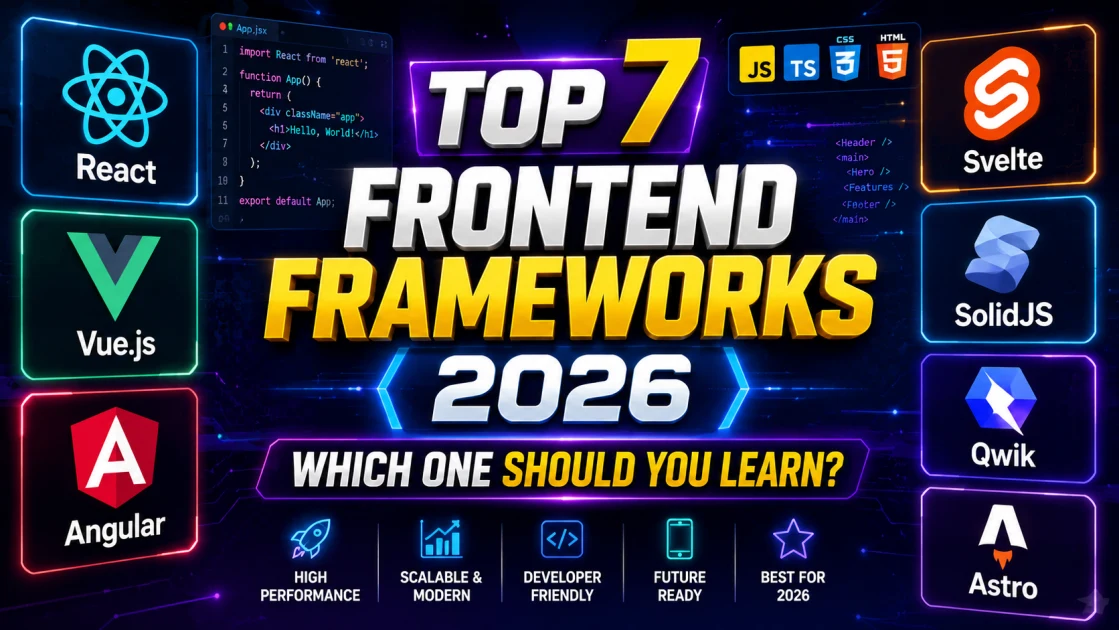
Table of Contents
- What is a Frontend Framework?
- How We Evaluated These Frameworks
- 1. React
- Advantages
- Disadvantages
- Best For
- 2. Vue.js
- Advantages
- Disadvantages
- Best For
- 3. Angular
- Advantages
- Disadvantages
- Best For
- 4. Svelte
- Advantages
- Disadvantages
- Best For
- 5. SolidJS
- Advantages
- Disadvantages
- Best For
- 6. Qwik
- Advantages
- Disadvantages
- Best For
- 7. Astro
- Advantages
- Disadvantages
- Best For
- Choose React if:
- Choose Vue if:
- Choose Angular if:
- Choose Svelte if:
- Choose SolidJS if:
- Choose Qwik if:
- Choose Astro if:
- A recommended learning path:
Top 7 Frontend Frameworks to Learn in 2026
Frontend Frameworks to Learn in 2026 are evolving rapidly as web applications become faster, more interactive, and increasingly complex. Whether you're a beginner starting your web development journey or an experienced developer looking to upgrade your skills, choosing the right frontend framework can significantly impact your career and project success.
Whether you're a beginner learning web development or an experienced developer planning your next project, this guide compares the seven best frontend frameworks you should consider in 2026.
What is a Frontend Framework?
A frontend framework is a collection of tools, libraries, and reusable components that help developers build interactive web applications efficiently.
Instead of writing everything from scratch, frameworks provide a structured way to create responsive and maintainable user interfaces.
Popular companies like Meta, Google, Netflix, Microsoft, Airbnb, and many startups rely on frontend frameworks for their products.
How We Evaluated These Frameworks
To identify the best frontend frameworks, we considered several important factors:
Performance
Learning Curve
Community Support
Ecosystem
Scalability
Job Market Demand
Long-Term Support
Developer Experience
1. React
React remains the most popular frontend library in 2026 and continues to dominate the job market.
Developed by Meta, React follows a component-based architecture that makes applications modular, reusable, and easy to maintain.
Advantages
Massive developer community
Huge ecosystem
Excellent job opportunities
Fast rendering with Virtual DOM
Perfect for large applications
Disadvantages
Requires additional libraries for routing and state management
Learning advanced concepts takes time
Best For
Enterprise applications
SaaS products
Dashboards
Startups
Large-scale web apps
Performance: ⭐⭐⭐⭐☆ (4.5/5)
2. Vue.js
Vue.js focuses on simplicity without sacrificing power. It is one of the easiest frontend frameworks to learn and offers an excellent developer experience.
Many startups prefer Vue because development is quick and the syntax is clean.
Advantages
Beginner-friendly
Easy integration
Fast development
Excellent documentation
Lightweight
Disadvantages
Smaller ecosystem than React
Fewer enterprise jobs
Best For
Small to medium projects
Admin panels
Business websites
Progressive web apps
Performance: ⭐⭐⭐⭐⭐ (4.5/5)
3. Angular
Angular is Google's enterprise frontend framework built entirely with TypeScript.
It comes with almost everything developers need, including routing, dependency injection, forms, and HTTP support.
Advantages
Complete framework
Excellent architecture
Strong TypeScript support
Ideal for enterprise software
Disadvantages
Steeper learning curve
Larger bundle size
Best For
Enterprise software
Banking applications
Government projects
Large development teams
Performance: ⭐⭐⭐⭐☆ (4/5)
4. Svelte
Svelte introduces a different approach by compiling your code during build time instead of relying on a Virtual DOM.
This results in faster applications and smaller JavaScript bundles.
Advantages
Extremely fast
Minimal boilerplate
Simple syntax
Small bundle sizes
Disadvantages
Smaller community
Limited third-party libraries
Best For
Personal projects
Small applications
High-performance websites
Performance: ⭐⭐⭐⭐⭐ (5/5)
5. SolidJS
SolidJS combines React-like syntax with a highly efficient reactive system.
Instead of using a Virtual DOM, it updates only the necessary parts of the page, resulting in exceptional performance.
Advantages
Extremely fast rendering
Fine-grained reactivity
Familiar JSX syntax
Disadvantages
Smaller ecosystem
Fewer learning resources
Best For
High-performance applications
Developers interested in modern reactive programming
Performance: ⭐⭐⭐⭐⭐ (5/5)
6. Qwik
Qwik is designed around a "resumable" architecture that helps websites load almost instantly.
Rather than downloading the entire application at once, Qwik loads only the code required for the current interaction.
Advantages
Excellent page speed
Outstanding Core Web Vitals
Optimized for large websites
Disadvantages
New ecosystem
Smaller community
Best For
Performance-critical websites
E-commerce
SEO-focused applications
Performance: ⭐⭐⭐⭐⭐ (5/5)
7. Astro
Astro is one of the fastest-growing frameworks for content-driven websites.
It sends minimal JavaScript to browsers, making websites load significantly faster.
Advantages
Excellent SEO
Fast loading speed
Supports React, Vue, and Svelte components
Perfect for static websites
Disadvantages
Not designed for highly interactive applications
Best For
Blogs
Documentation
Portfolio websites
Marketing websites
Performance: ⭐⭐⭐⭐⭐ (5/5)
Frontend Framework Comparison
Framework | Learning | Performance | Community | Best For |
|---|---|---|---|---|
React | Medium | ⭐⭐⭐⭐☆ | Excellent | Enterprise Apps |
Vue | Easy | ⭐⭐⭐⭐⭐ | Very Good | Beginners & Startups |
Angular | Hard | ⭐⭐⭐⭐☆ | Excellent | Enterprise Development |
Svelte | Easy | ⭐⭐⭐⭐⭐ | Good | Fast Applications |
SolidJS | Medium | ⭐⭐⭐⭐⭐ | Growing | Performance-Focused Apps |
Qwik | Medium | ⭐⭐⭐⭐⭐ | Growing | SEO & Performance |
Astro | Easy | ⭐⭐⭐⭐⭐ | Growing | Blogs & Static Sites |
Which Framework Should You Learn?
Choose React if:
You want maximum job opportunities.
You plan to become a Full Stack Developer.
You are interested in building scalable web applications.
Choose Vue if:
You are new to frontend development.
You want a gentle learning curve.
You enjoy clean and intuitive syntax.
Choose Angular if:
You want to work in enterprise environments.
You enjoy structured development with TypeScript.
Choose Svelte if:
Performance is your top priority.
You prefer writing less code.
Choose SolidJS if:
You want cutting-edge performance.
You like React-style development with a different rendering model.
Choose Qwik if:
You care deeply about page speed and SEO.
You are building modern, performance-first applications.
Choose Astro if:
You are creating blogs, documentation sites, or content-focused websites.
Fast loading times and SEO are essential.
Frontend Developer Roadmap 2026
A recommended learning path:
HTML5
CSS3
JavaScript (ES6+)
TypeScript
Git & GitHub
React or Vue
API Integration
State Management
Testing
Performance Optimization
Deployment
Build Real Projects
Final Verdict
There is no single "best" frontend framework for every project. The right choice depends on your goals, team, and application requirements.
React remains the strongest all-round option due to its ecosystem, job demand, and flexibility.
Vue.js is ideal for beginners and teams that value simplicity.
Angular continues to be a reliable choice for enterprise-scale applications.
Svelte and SolidJS stand out for their exceptional performance and modern development experience.
Qwik introduces innovative performance techniques for fast-loading applications.
Astro is an excellent option for SEO-friendly, content-focused websites.
The best approach is to master the fundamentals of HTML, CSS, JavaScript, and TypeScript first, then choose one primary framework based on your career goals. Building real-world projects and understanding core web concepts will provide far greater long-term value than chasing every new framework that appears.